Playhouse, Sydney Opera House, June 10
6.5/10
Eddie Izzard loves a challenge. Her 131 marathons since 2009, raising money for charity, began with completing 43 of them in 51 days, despite no previous distance running. That gives context to her 140-minute version of Hamlet, playing all roles. For most actors, just playing the Dane is challenge enough.
It’s a monstrous achievement in terms of memory and stamina, and as entertainment it seldom flags. In quality of performance, it’s more variable.
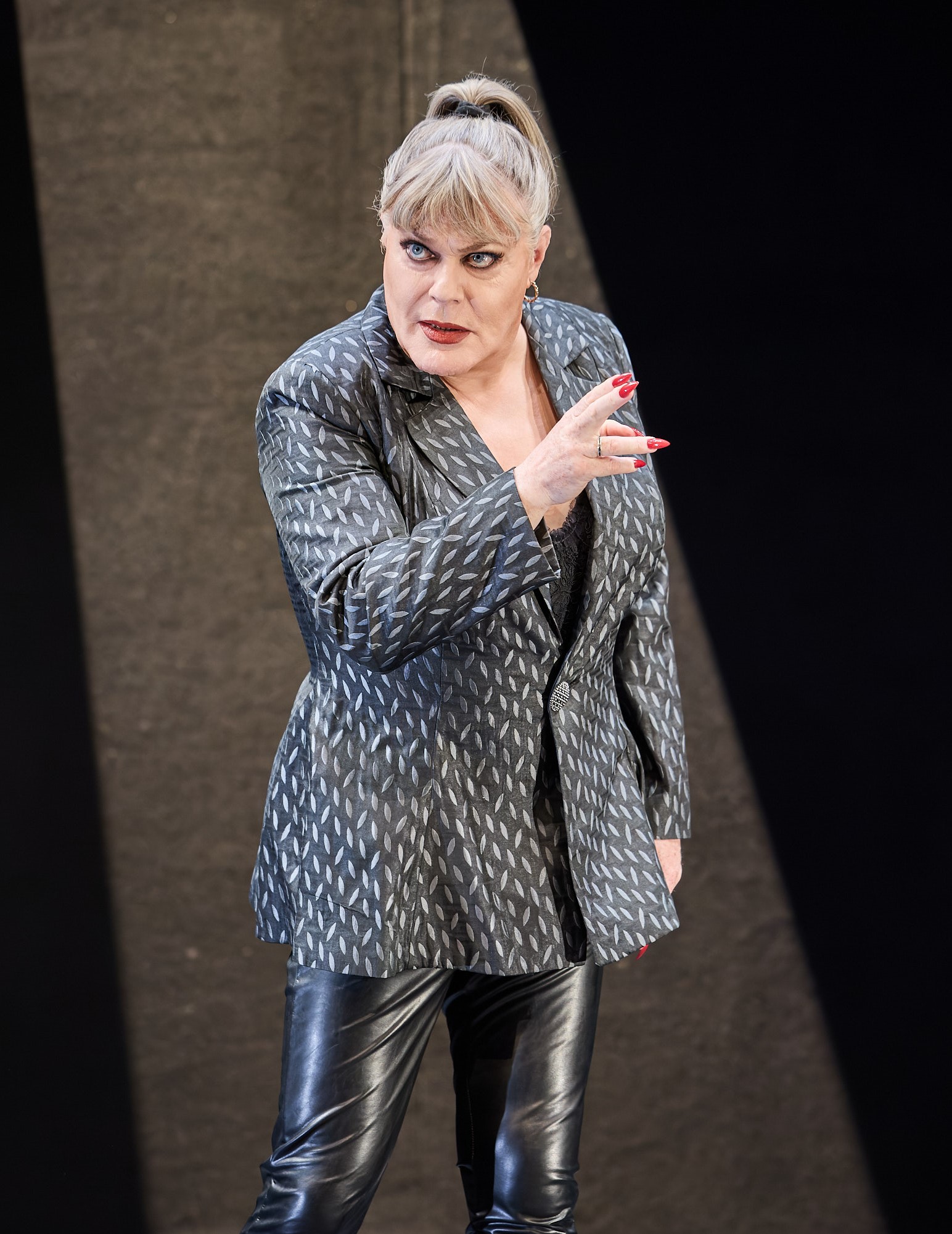
Attired in clothes that cunningly imply a period setting without defining it, Izzard appears on a black-box stage with unchanging white light. The only theatrical embellishment to this production, directed by Selina Cadell, is the occasional interplay of two shadows on the backdrop to create the illusion of two interlocutors.
Otherwise it’s just Izzard, wearing a head microphone, and dancing from facing left to facing right as she continually swaps roles, or coming downstage to address us when delivering the soliloquies. These are not her strong suit, with a pantomime quality sometimes creeping in as she confides in us (“To be or not to be”), or, as with “O, what a rogue and peasant slave am I…”, failing to convey the full intellectual galaxy of ideas. In delivering “Tis now the very witching time of night…” and “Now might I do it…”, however, she achieves an intensity that shows what was within reach.
In dialogue, her Hamlet’s more consistent, especially if humour’s flashing about, as when, in conversing with Rozencrantz and Guildenstern, her two hands become talking puppets. The Act III confrontation with his mother attains a dramatic scale that could well have been of service elsewhere: when Hamlet first sees the Ghost, for instance, no terror is extant beyond the words, themselves, and the Ghost speaks a little too like a caricatured Dracula.
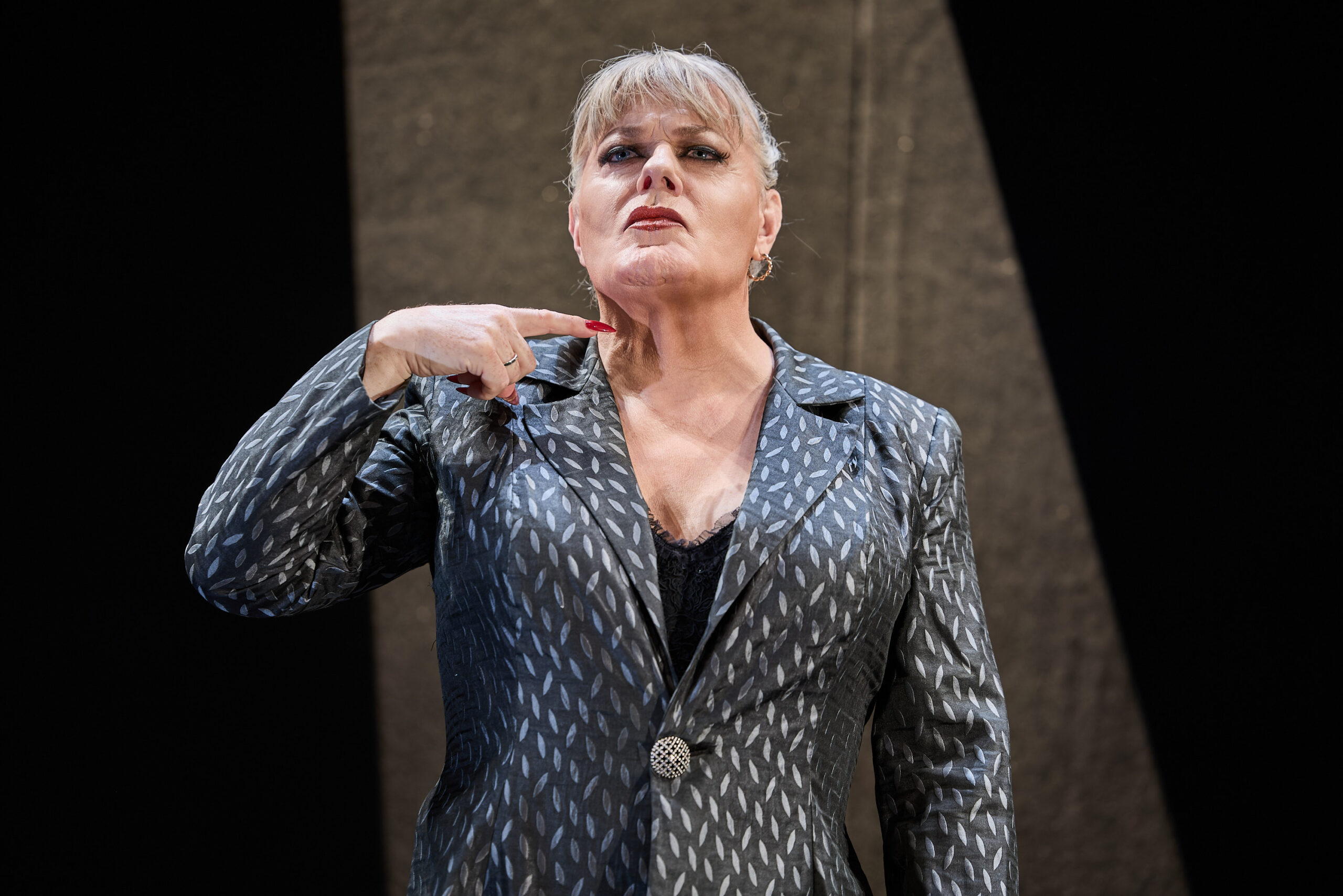
But Izzard’s Ophelia is a wondrous creation of light and air, her Gertrude truly torn between lust for her new husband and love for her erratic son, and her Claudius can be a genuine physical and vocal force.
Her changes of voice between characters are mostly underplayed – clearly hoping that the words and rudimentary knowledge of the story will ensure no one’s lost for long – and sometimes one character’s voice overlaps with another during quick exchanges.
She excels in Ophelia’s mad scene, and the exquisite exchange between Hamlet and the gravedigger has all her stand-up instincts bristling. But where she’s overly reliant on mime, she falters, as with the gravedigger’s shovelling and the climactic swordfight between Hamlet and Laertes.
The text has been abridged – as is routine: a four-hour Hamlet would test the most ardent bardolater – and occasionally amended by Izzard’s brother, Mark (with such archaisms as “beaver” updated to “visor”).
Ultimately, it’s amply diverting, without having a fully worthy Hamlet at its core. He’s lurking there, somewhere, if Izzard believed as strongly as she did to complete those marathons.
Until June 21.