Reginald Theatre, April 11
8/10
“When you speak another language… you go years without making anyone laugh,” Marjan says towards the end of this play, in which she helps four Iranian students in Karaj prepare for their Test of English as a Foreign Language exam. Her statement is mildly ironic, given her teaching capacity, and dramatically ironic because the play often does make us laugh. It’s also a profoundly sad observation.
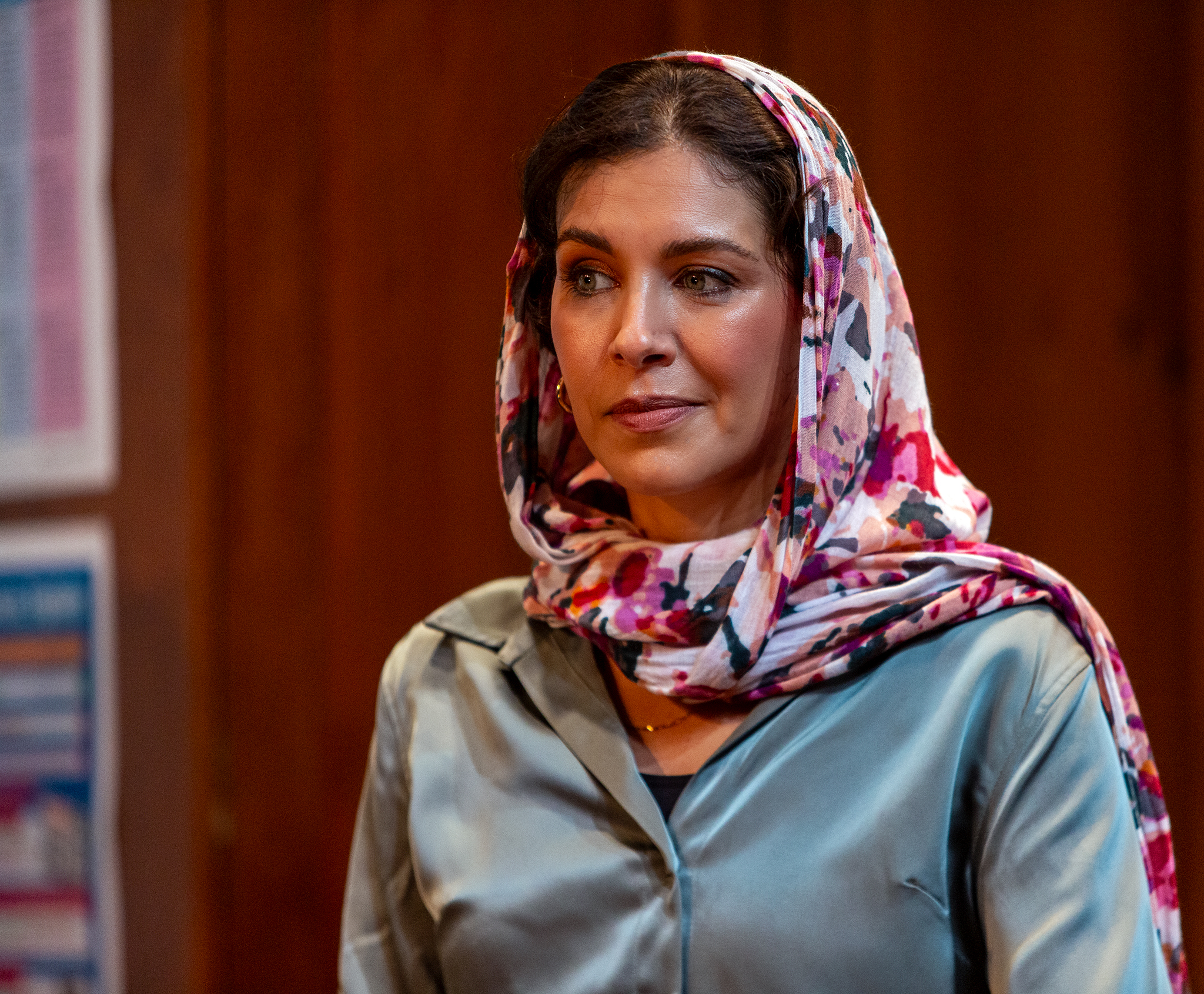
Iranian/US playwright Sanaz Toossi won the 2023 Pulitzer Prize for English, which, on its surface, is an unassuming little piece comprising a multitude of short classroom scenes set across a six-week course. Seething beneath these are the emerging private lives of the five characters, and the four students’ differing motivations for studying English. Then, lying as substrata beneath all that, are the endless ramifications of the way a foreign language affects thought, humour and, ultimately, identity.
Genuine polyglots readily think and joke in multiple languages, but for three of the play’s four students – as for most people trying to acquire a second language later than childhood – the task seems a labyrinth of ever-compounding complexity.
The quirk that Toossi uses, and to which we much adjust, is that when the characters putatively speak Farsi, they use unaccented English, and when they speak English, they have varying degrees of an Iranian accent. Director Craig Baldwin (for the consistent Outhouse Theatre Co), found five actors who can tick these boxes, but mostly with screen backgrounds. It’s a credit to them and Baldwin that their stage performances are quite complete.
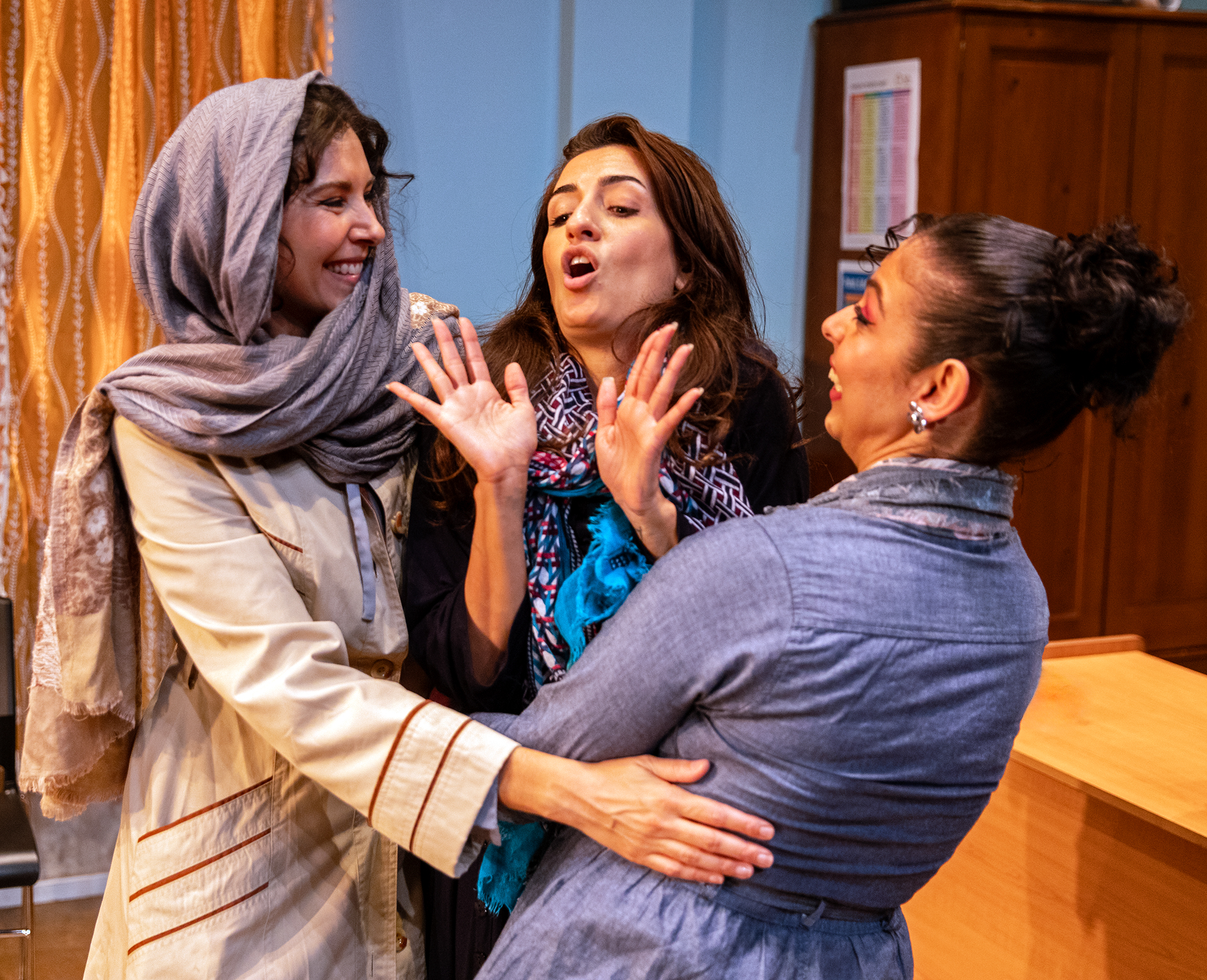
Nicole Chamoun plays Marjan, the teacher, who spent nine years in Manchester, and whose Farsi, we gather, is as accented as her English. Despite the amusing games and exercises she devises (including endless alliteration on the letter “w”, which comes more naturally as a “v” for the students), she’s beset with imposter syndrome. Chamoun generally accomplishes the potentially elusive balancing act between Marjan’s confidence, over-confidence and terror that she’s failing her class.
Despite being married, she also develops a reciprocated crush on the lone male student, Omid. Pedram Biazar succeeds at giving a character who’s something of a charlatan a nice-guy veneer, although Omid’s being the most competent English speaker makes it tricky for us to discern when he’s supposed to be speaking Farsi, given Toossi’s device.
Minerva Khodabande bounces between emotional extremes as the livewire Goli, the youngest student, and Setareh Naghoni excels as the insubordinate Elham, who manages to antagonise everyone. Neveen Hanna mostly does a fine job with Roya, the oldest student, who’s learning English so she can converse with her Canadian-born granddaughter, but who may not be as welcome in her son’s new life as she thinks.
Time lapses are signalled with bustling Persian music composed by Hamed Sadeghi (and brilliantly recorded), and you emerge after 80 minutes to find the seemingly unassuming play has just reset your understanding of the migrant experience.
Until May 2.