1 Grief is the Thing with Feathers, Belvoir St Theatre
A mere handful of the thousands of shows I’ve seen have burned themselves permanently into my brain. They include Peter Brook’s A Midsummer Night’s Dream, Roy Dotrice in Brief Lives, Steven Berkoff’s Salome and Neil Armfield’s Cloudstreet. This list seldom expands, but last year it added Damien Ryan’s searing performance as the protagonist in Sport for Jove’s Timon of Athens at Leura Everglades, and this year it added Grief is the Thing with Feathers. Director Simon Phillips, designer Nick Schlieper and actor Toby Schmitz’s adaptation of Max Porter’s prize-winning novel exploded upon the Belvoir stage: luminous, dark, funny, mind-expanding, poetic and desperately moving.
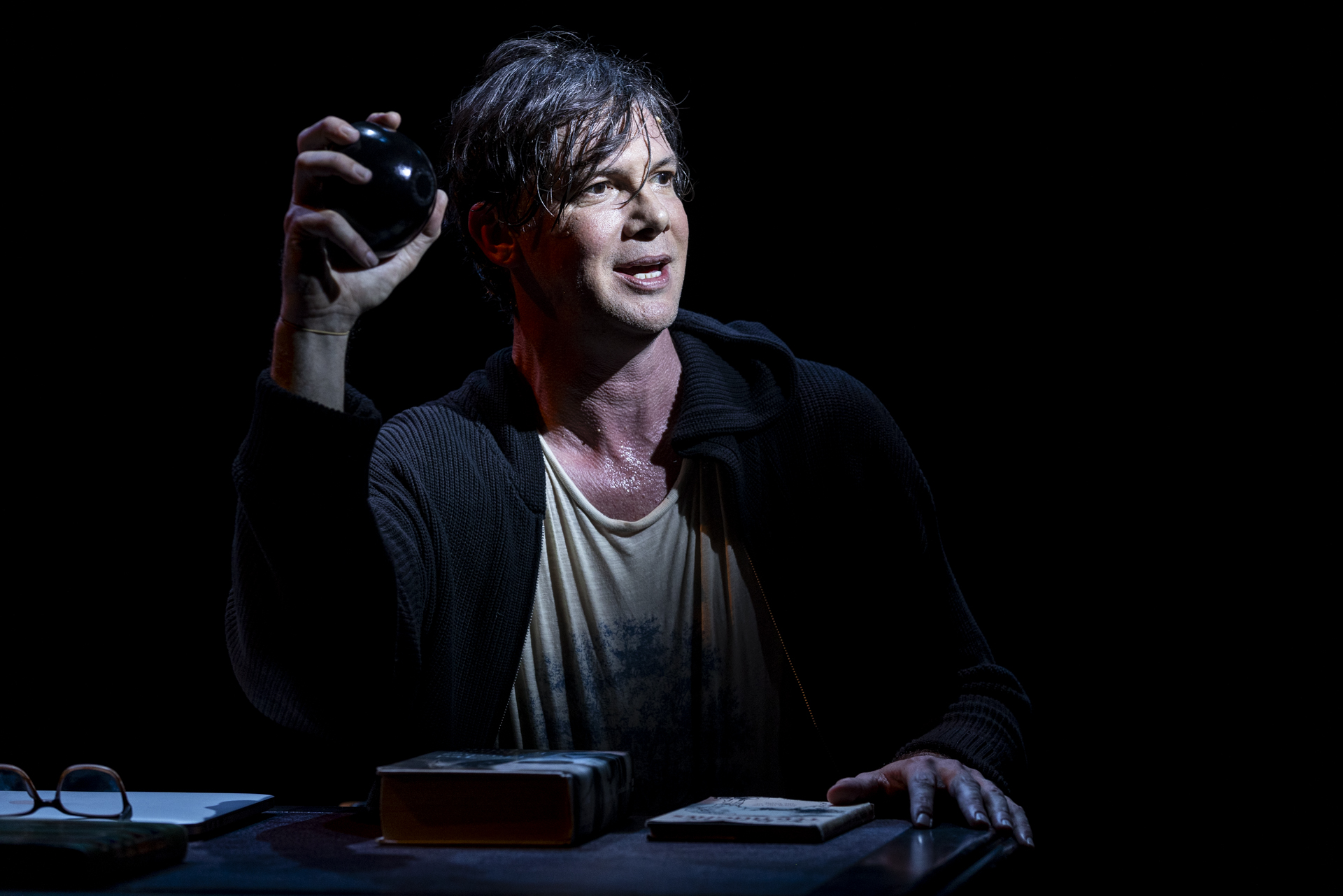
Schmitz’s character, Dad, faces his wife’s sudden death while writing a book about the poet Ted Hughes. In his anguish, he’s visited by Crow (a creature from Hughes), also played by Schmitz: a black-clad bovver boy with a slender kind streak, who guides Dad and his two young sons (Philip Lynch and Fraser Morrison) towards a pin-spot of hope.
Schmitz was inspired, flitting between Dad with the holed heart, desperately trying to function as a father, and Crow, who made us laugh as he saved Dad from disappearing down an overflowing drain of grief.
The performances, operating on a plane far above pedestrian naturalism, fitted hand-in-claw with the design and music, bringing to life one of the new century’s great novels as a theatrical and emotional tour-de-force. A little bird has told me it will be back in 2027.
2 Who’s Afraid of Virginia Woolf? Roslyn Packer Theatre
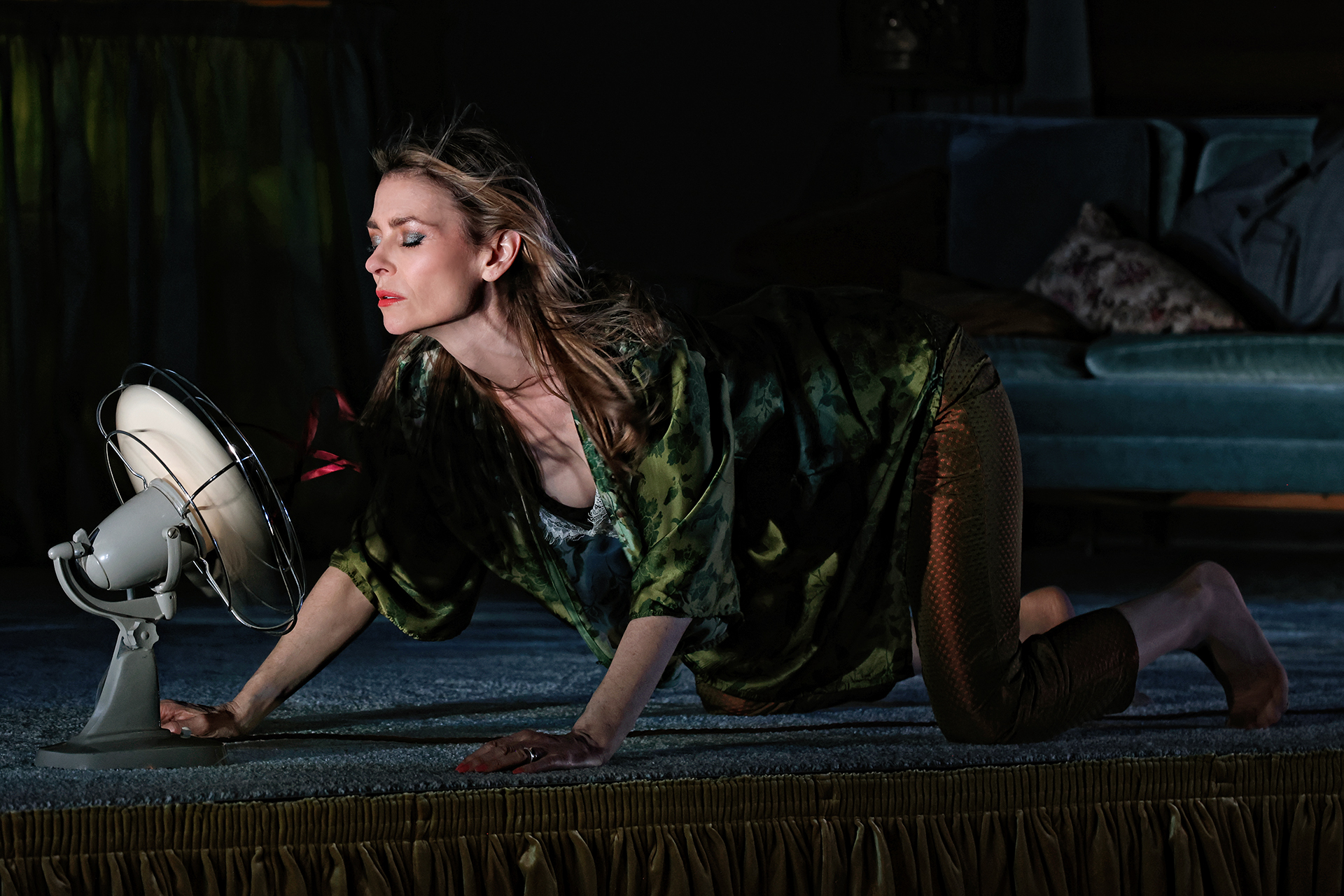
Like Elizabeth Taylor and Richard Burton, the Martha and George in Mike Nichols’ celebrated film of Who’s Afraid of Virginia Woolf?, Kat Stewart and David Whiteley are married in real life. Did it change anything about enacting drama’s most war-torn marriage? Stewart told me in an interview that they share a useful mutual shorthand and trust, which may have helped her hit that sweet spot of a Martha who’s frightening, obnoxious and boorish, yet whom we like. As well as assailing us with cyclonic rages, a formidable intellect and razor-wire wit, Stewart let us glimpse the little girl inside Martha, still having tantrums as she did when an unloved toddler. Especially potent was the heartbreaking terror on her face at the end.
If Whiteley couldn’t quite scale the same heights, he helped us understand the love underpinning their bouts of domestic carpet-bombing, specifically the shared delight in devising games. Whiteley’s George was stretched so thin that there was an electricity about whether he or Martha would snap first, however well you knew the play. Director Sarah Goodes’ cast was completed by Harvey Zielinski and Emily Goddard, with the latter’s drunken interpretative dance a wonder all its own.
3 Mary Jane, Old Fitz Theatre
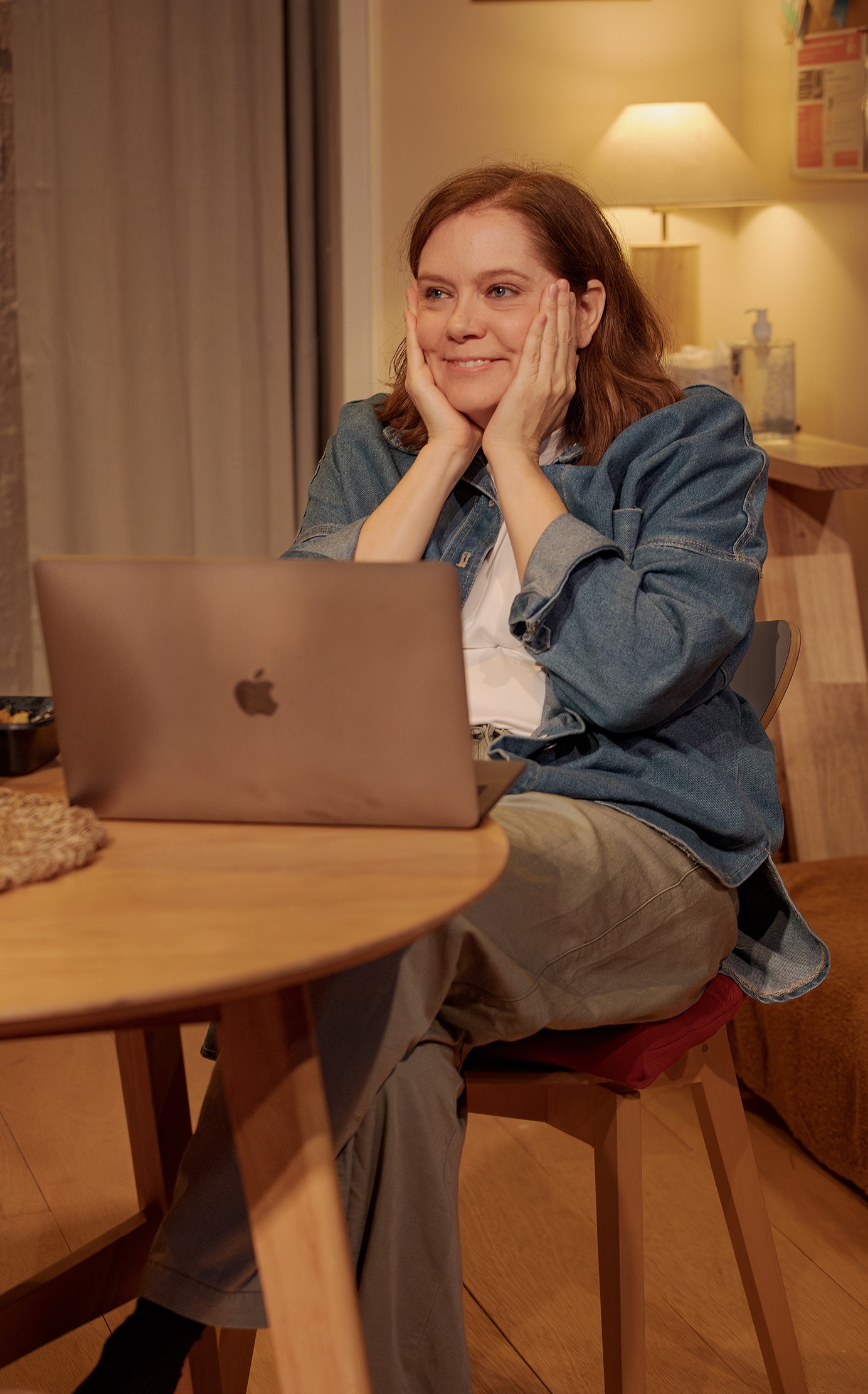
Although we never meet Alex, the two-and-a-half-year-old, riddled with critical medical conditions since birth, he’s the epicentre of Amy Herzog’s play about the necessity of sharing burdens, even when we hate to bother others. Herzog’s dialogue poleaxes you with its authenticity. Sentences trail off to an exhalation, a bemused facial expression or a (usually wrong) suggested word from the interlocutor.
Playing Mary Jane, Alex’s mother, Eloise Snape’s outward bubbliness masked a despairing cry within; a cry that Mary Jane dared not hear, or she’d shatter. Snape made you love Mary Jane because she’s fundamentally such a sunny person, despite the desolation constantly gnawing at her vitals. Director Rachel Chant’s other cast members, Di Adams, Sophie Bloom, Isabel Burton and Janine Watson, were good enough not only to withstand the blowtorch of scenes with Snape, but to enhance them. Watson was supreme as a doctor struggling for the words that will ease Mary Jane towards reality, without completely puncturing her fierce positivity.
4 True West, Ensemble Theatre
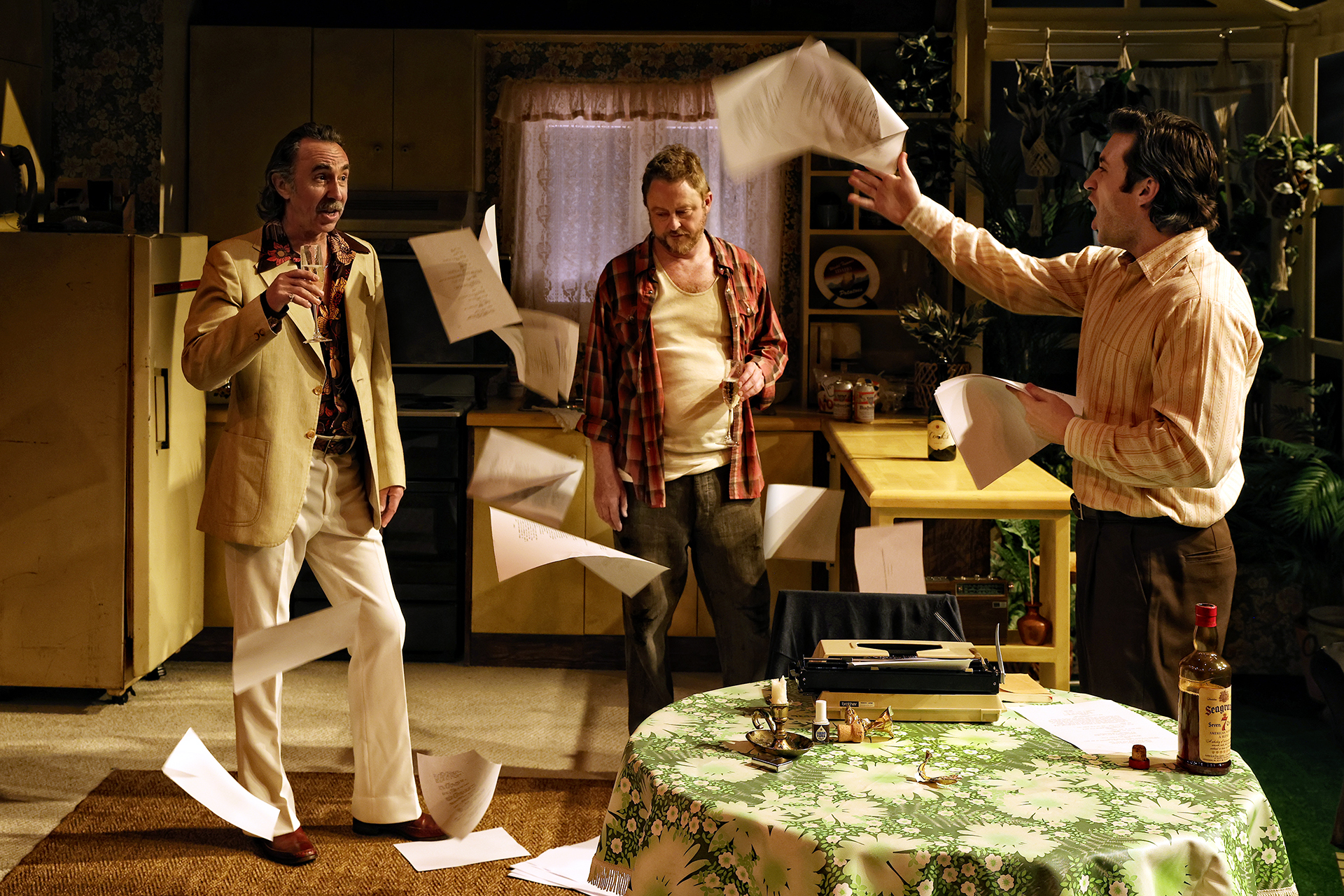
Simon Maiden, playing Lee, the bad-egg brother in Sam Shepard’s gritty 1980 play, created a tension thick with latent violence; a black hole of negative energy, his blank eyes staring with hate and resentment at his college-educated, mild-mannered brother, Austin (Darcy Kent). Austin had Saul (a lairy James Lugton) interested in his screenplay, but Lee bulldozed his way in on that, selling Saul on a lame idea for a modern-day western that’s one big chase sequence – an ironic metaphor for the lifelong game the brothers have been playing. Iain Sinclair’s meticulous production highlighted how Lee’s communication struggles bred frustration and its inevitable sidekick, aggression, and Maiden and Kent were riveting walking the seesawing power balance between them. At one point Kent, on his knees, was staring up at Maiden, and his performance was so potent you could see in his eyes the ghost of the hero-worship he once had for his brother: all part of Shepard’s manic snapshot of a US that can tear itself apart.
5 The Producers, Hayes Theatre

I try to laugh every day. Some days I fail. The Producers makes this list for giving me six months’ worth of laughter in one night. In fact, laughing at Nazis should be a routine community activity. Directed by Julia Roberton, this was among the most polished musicals I’ve seen. The detail in each line, voice, gesture, dance step, orchestration and design element was exhilarating. You could simply sit there in rapt admiration – except you were laughing too hard at lines like, “The urge to merge can rob us of our senses.” The cast of 14 somehow nailed Shannon Burns’ scintillating Springtime for Hitler choreography on the Hayes’ baby stage without spilling over and accidentally invading New Zealand. Anton Berezin excelled as Max, Des Flanagan played Bloom with the innocence of a two-year-old pretending he hasn’t wet his pants, as he deciphered the willing innuendoes spilling from Ulla, deliciously played by Alexandra Cashmere. Jordan Shea was Franz, the Hitler-worshipping pigeon-fancier, and Benedict Janeczko-Taylor’s costumes iced a cake already so near-perfectly baked that even neo-Nazis might have swallowed it.
This artcile first appeared in The Sydney Morning Herald, December 23, 2025: https://www.smh.com.au/culture/theatre/critic-john-shand-saw-more-than-50-shows-this-year-here-are-his-five-favourites-20251219-p5np1z.html