Sydney Opera House Forecourt, February 28
7.5/10
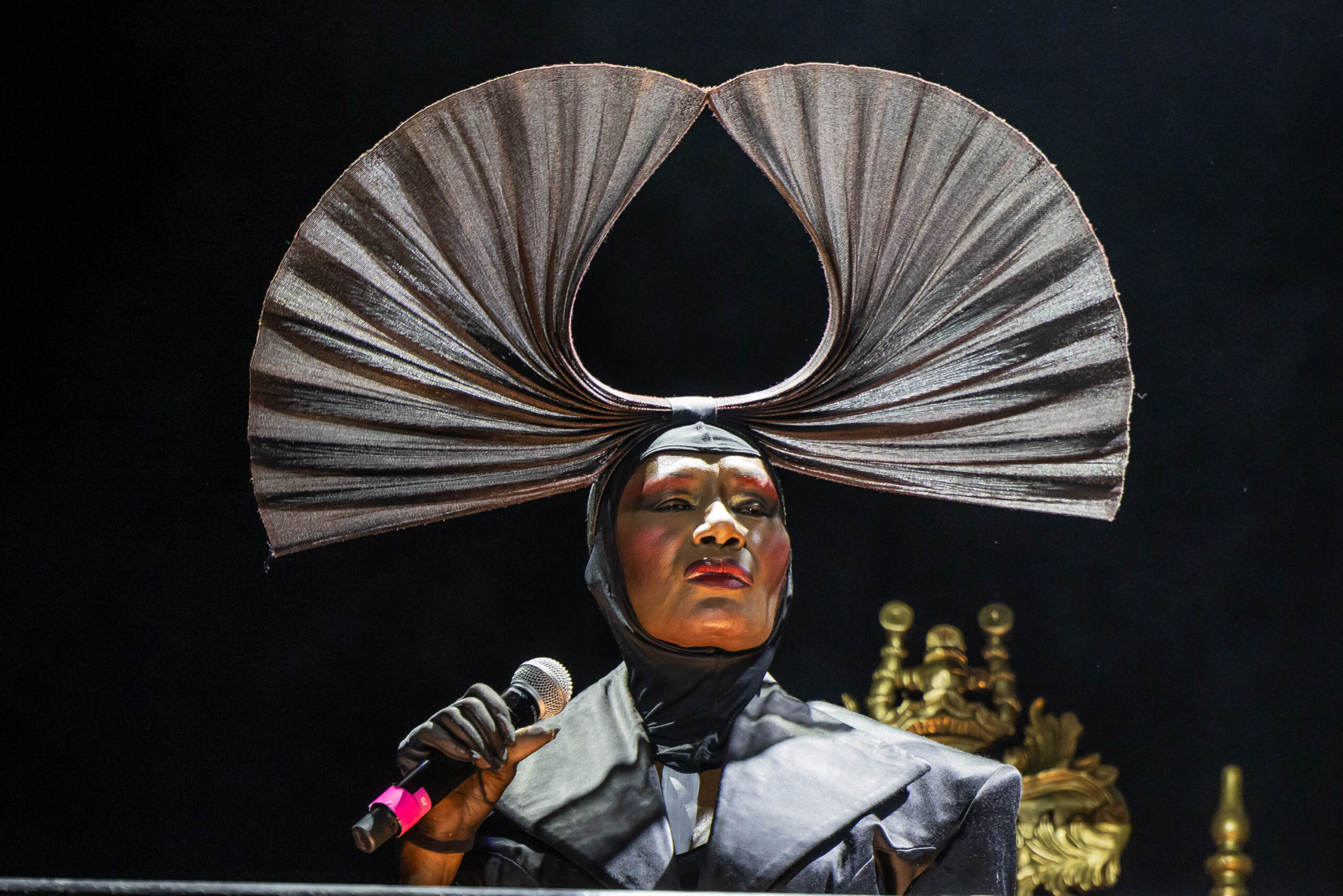
Grace Jones would still be startling were she 37 rather than 77. I’ve seen teens with less energy and less joie de vivre, and few people of any age can hold a candle to her charisma. The other improbability is that her voice is better now than it was in her ’80s heyday. It still has lapses of pitch (Amazing Grace is a bad idea), but it has darkened and deepened, sometimes almost sounding like a male baritone.
It was charming in an a cappella exchange with the crowd after a frantic Love is the Drug, and she used it with real commitment on Williams Blood from 2008’s Hurricane album, which remains her most recent release. (She did, however, give us a taste of a forthcoming album: a very funky song called The Key. Grace spreads her albums decades apart these days.)
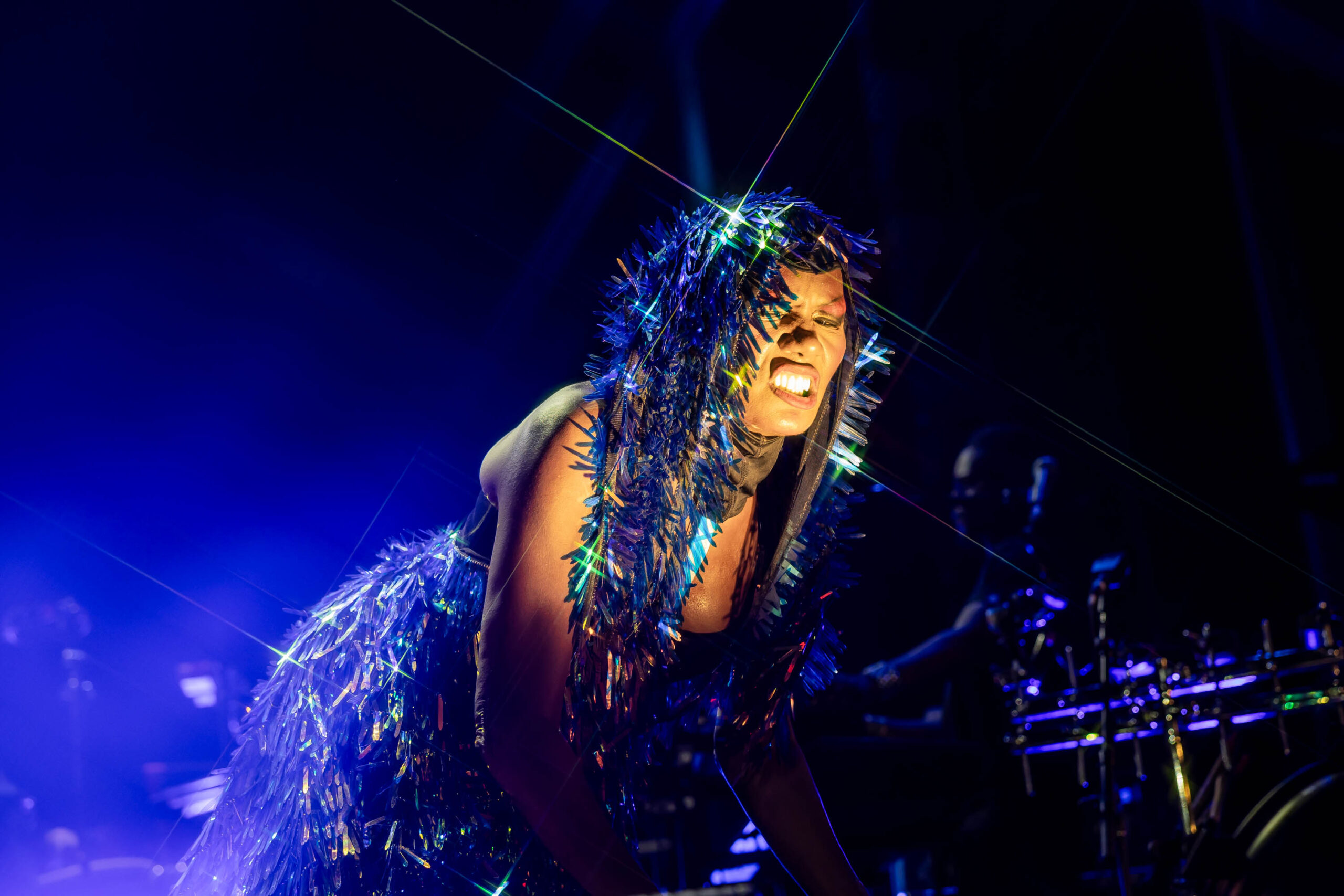 Alas, the same commitment was absent when she sang the finest song she’s ever covered, Astor Piazzolla’s Libertango, remade into I’ve Seen that Face Before. Perhaps 45 years of performing it has worn it thin, but it could still steal the show if she sang it as well as she did Williams Blood. Even her fabulous band sounded like it was just going through the motions here.
Were Grace not so funny, the lengthy breaks between songs – never filled instrumentally by the band – while she swaps between outlandish costumes, would be dead weights on the show. Instead, she’s busily quipping and teasing, sometimes from the wings while being wrangled out of and into her glam hats and fabled headdresses.
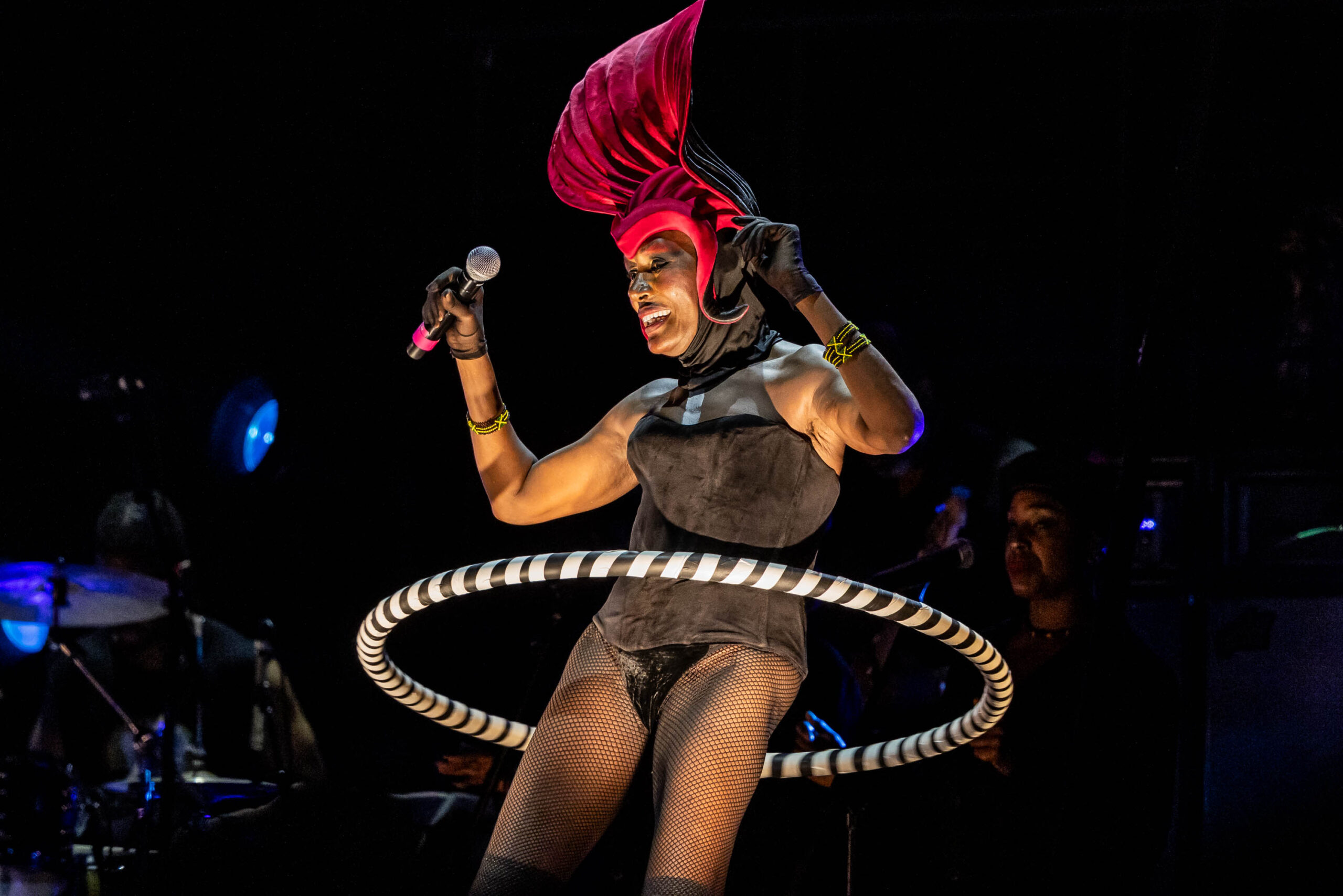 During the songs the comedy continues, whether she’s inverting herself on the golden upstage throne during My Jamaican Guy, thrashing two innocent crash cymbals into submission on Demolition Man, or, during Pull up to the Bumper, riding into the area between stage and mosh-pit on a minder’s immense shoulders, scantily clad and smiling a smile that could be a source of renewable energy.
The hula-hoop still came out for Slave to the Rhythm, ending a 95-minute show that had started predictably late with another defining classic, Iggy Pop and David Bowie’s Nightclubbing. Grace’s version was always stronger than Iggy’s, and remains so: more relentless and more sinister, with that hint of automaton to her vocals.

Somehow she manages to sustain a career heavily reliant on 45-year-old material, yet it seems more a celebration than a nostalgia exercise. That’s partly down to Grace’s infectious pleasure in being on stage and in the moment, and partly to the expertise of the eight-piece Illustrious Blacks, led by keyboardist Charles Stuart, and containing such effective contributors as stinging guitarist Louis Eliot, understated bassist Malcolm Joseph and crisp drummer Andrew McLean.
At the end, she said she’d be back. Perhaps she will be. Perhaps she’s ageless. If there’s a secret, whisper it to me, Grace.