Ensemble Theatre, December 3
7/10
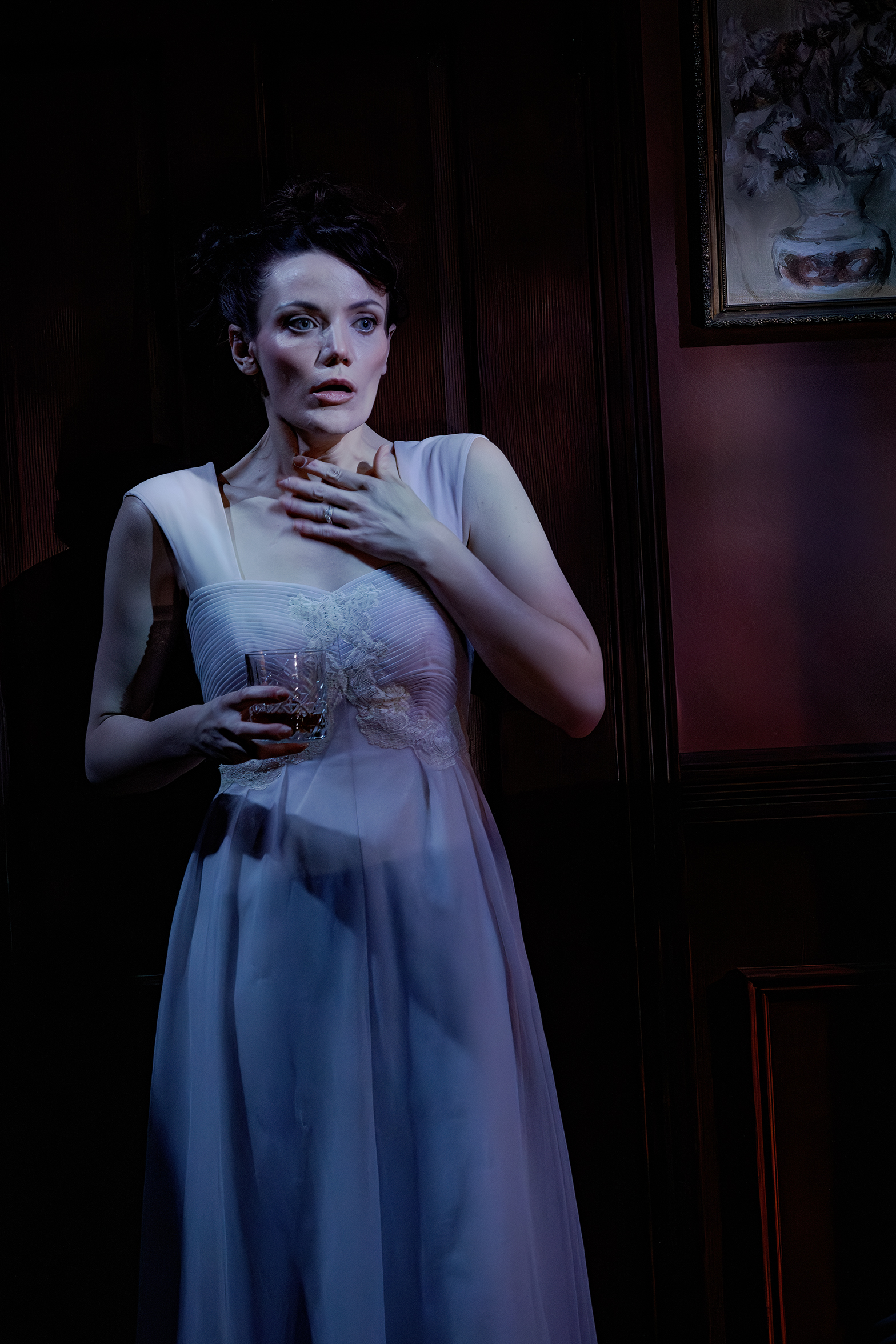
Without the sharp editing available to a film-maker, on-stage thrillers tend to gurgle down the drain of melodrama. The wonder of this production of Dial M for Murder is that avoids that grisly end. Just.
Alfred Hitchcock took Frederick Knott’s original play, and turned it into one of his greatest films, starring Grace Kelly as Margot, the rich heiress whose demise is sought by her husband, Tony, partly because she’s taken a lover, but primarily so he can cash in her will.
Then, in 2020, Jeffrey Hatcher created this new adaption, largely to give more agency to Margot, who spent much screen-time resting her head against men’s chests, passively waiting to be saved. Hatcher also spiced up the story by having Margot’s lover be Maxine rather than Max. Given that the setting remains 1950s London, this makes Margot’s trial for murder that much more salacious.
In Mark Kilmurry’s admirably detailed production, Nick Fry’s set is a prim and proper depiction of a Mayfair apartment, and Anna Samson initially plays Margot with the joie de vivre of one who thinks she can have her cake and eat it. She expresses fond love for her husband (Garth Holcombe), while exuding wary desire for Maxine (Madeline Jones), who has suddenly returned to London from New York for the launch of her new book, Your Death Is Necessary.
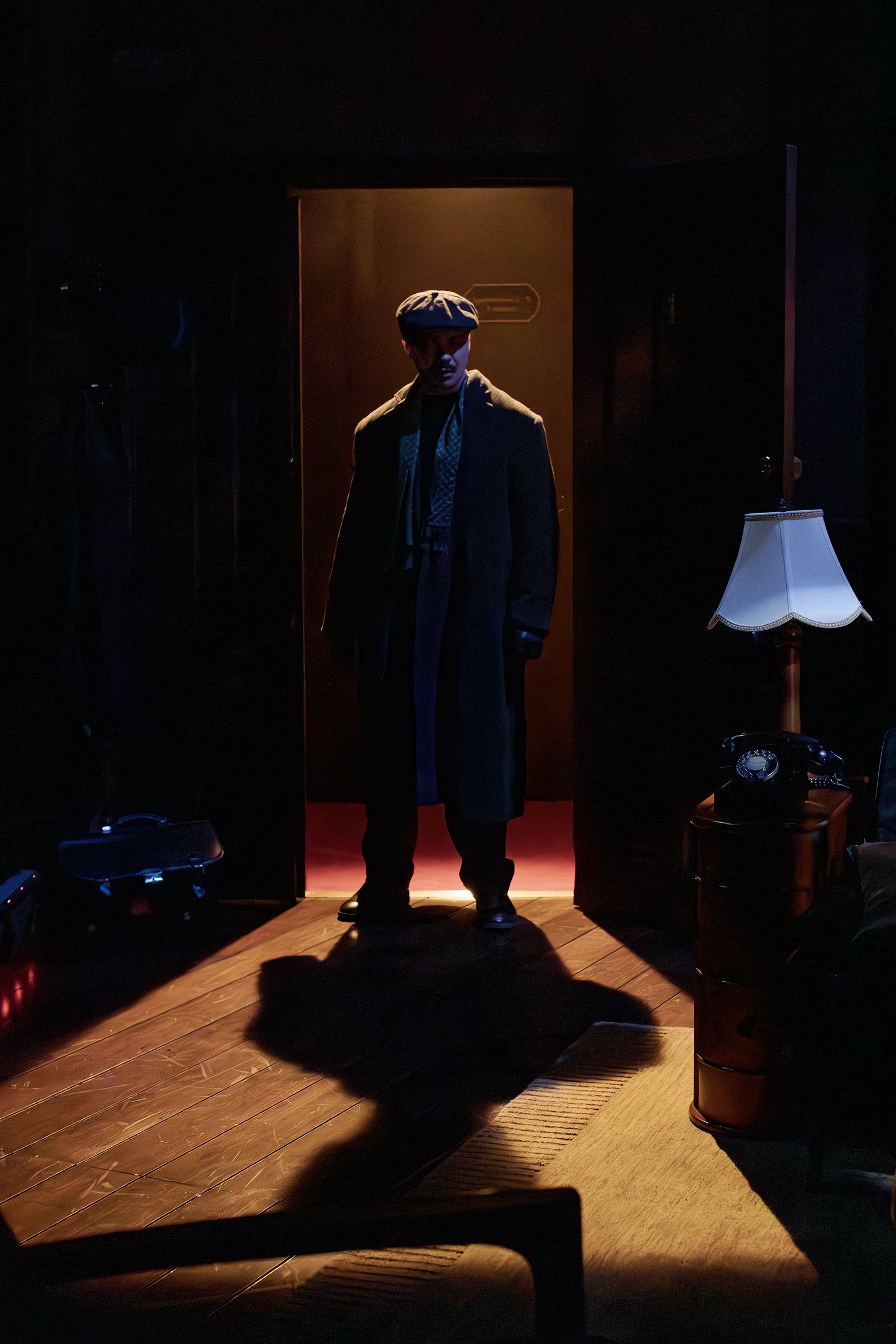
The early scenes are too arch, but even when the acting levels out a little, the story-telling doesn’t quite shrug aside that quality, despite Samson’s best efforts to be appealing, Holcombe’s to be urbane and Jones’ to be playful. David Soncin is also well-cast as Lesgate, the hired killer, and the murder scene, expertly choreographed by Scott Witt, is genuinely gripping.
For all the good work, however, the smell of melodrama still hangs as thickly in the air as cigarette smoke once would once have done, perhaps magnified by Kilmurry’s decision to have composer Madeleine Picard underscore so much of the action.
Then, in act two, like a knight slaying a dragon, in rides Kenneth Moraleda as Inspector Hubbard, the copper who’s a nudge smarter than he lets on, and who punctures any lingering melodrama through the simple expedient of comedy. It’s there in Hatcher’s lines and in Kilmurry’s direction, but Moraleda deserves much of the credit for making the character so thoroughly entertaining. A thriller with comedy attached works so much better on stage than one without.
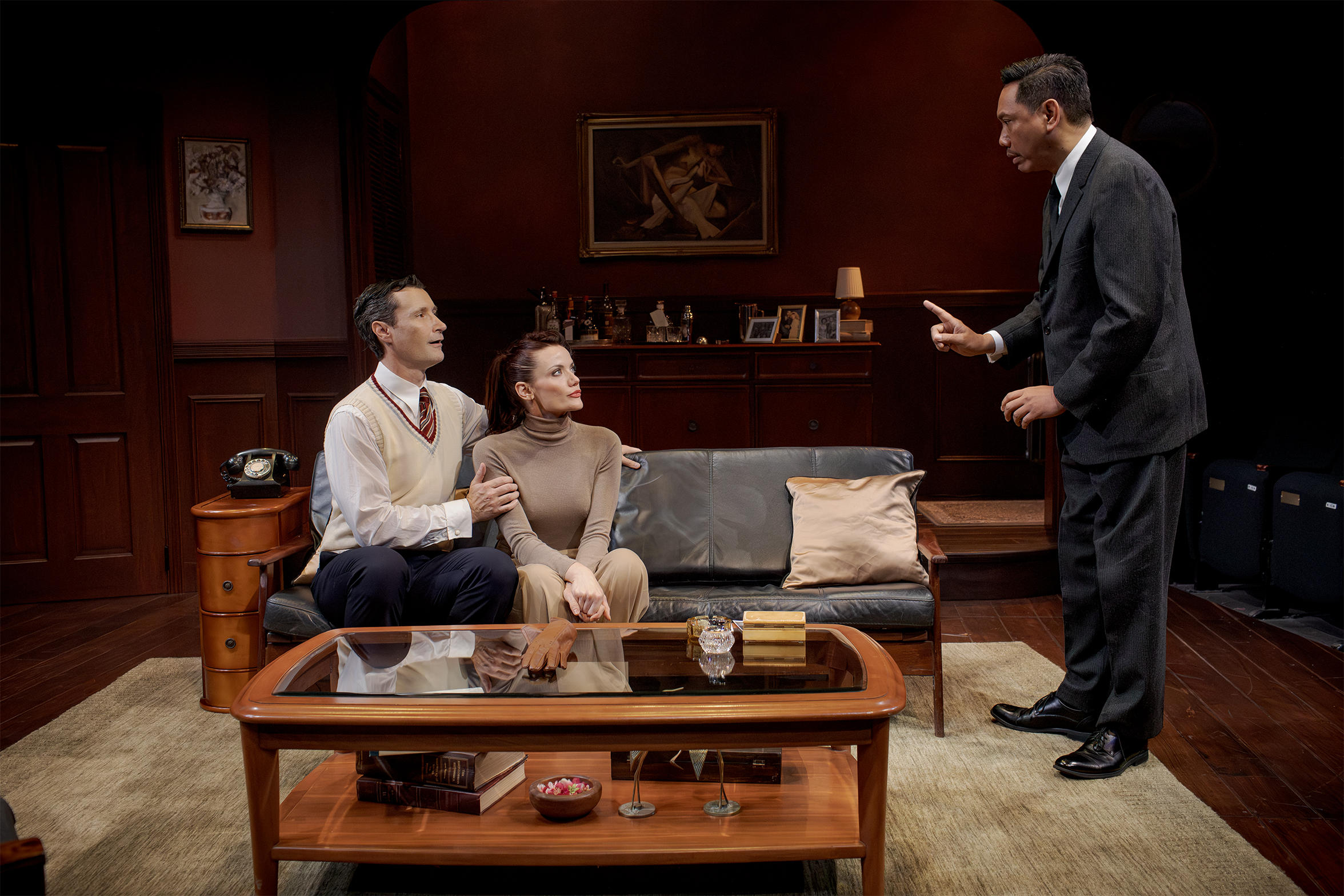
Moraleda’s presence suddenly raises the overall performance level, too, as if the actors now know more clearly what sort of (less po-faced) drama they’re in, and therefore how to play it. Samson’s Margot becomes compelling with her back to the wall, Jones makes Maxine more interesting and convincing, and Holcombe’s slightly fussy characterisation continues to work. Hatcher, meanwhile, has a couple of plot twists that shall be left for you to discover.
Until January 11.