KXT on Broadway, December 13
6.5/10
There’s no flashback as delightfully disorienting as an unreliable one. Trent Foo uses the device repeatedly in his debut play. The spiral of realities is made all the giddier by Foo’s also playing the protagonist Heepa, so Foo’s character is arguing about the veracity of what Foo, the playwright, has written.
The flashbacks come in the context of the orphaned Heepa visiting the underworld, with the audience members becoming his ancestors. He’s done this because he’s hosting the family Christmas party for the first time, to be attended by massed relatives, Chinese and white, although not by his dear Paw Paw (grandmother), with whom he’s fallen out. He wants we ancestors to change her mind.
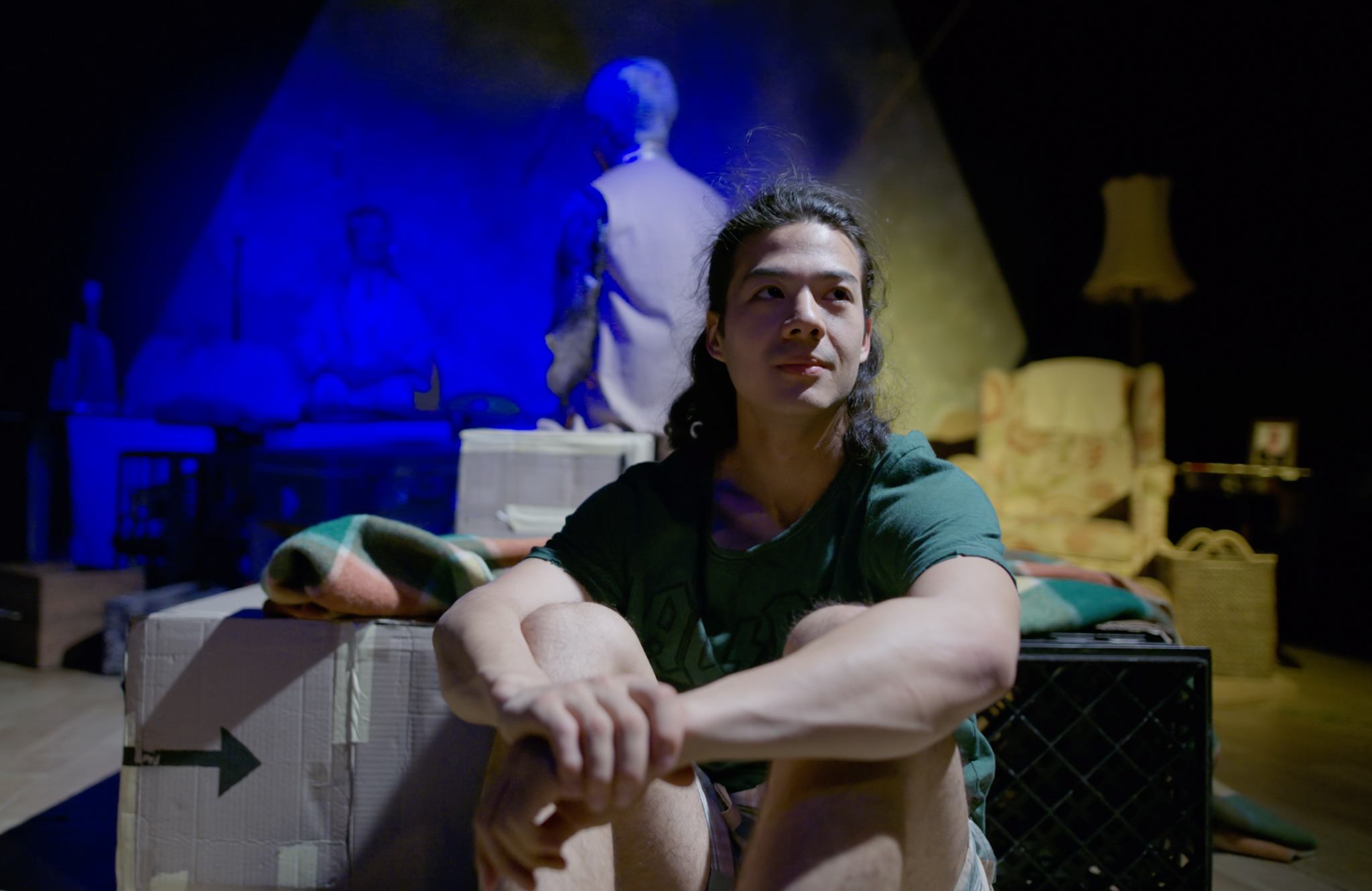
Heepa’s guide or custodian in the underworld is Lady Dai, the famed Chinese noblewoman from 2,200 years ago, who says little verbally and much musically. She’s played by Jolin Jiang, who also composed the music that she plays on string and percussion instruments. Often diaphanously beautiful in itself, the music’s not only an underscore, but a signifier of moments of magic or wonderment, aided by Cameron Smith’s sound design and Cat Mai’s lighting.
Heepa’s flashbacks explore the shifting dynamic between himself and his Paw Paw, with Tiang Lim captivating as the latter. She, too, says little, and she emotes less, while conveying the stern-faced, undemonstrative love she feels for Heepa. When a given flashback ends, and he argues that this was not what happened, we slowly come to understand that it is not the underworld playing tricks on him, but his own memory. So it’s partly a play about dawning self-awareness.
Foo’s playwriting craft is sound, his imagination better and his performance endearing, and debut director Monica Sayers has astutely blocked the show for KXT’s traverse stage. There are missteps, however. When we arrive, the stage is littered with covered boxes and props, the latter gradually contributing to Heepa’s decoration of an A-frame stepladder “Christmas tree” across the play’s 70 minutes.
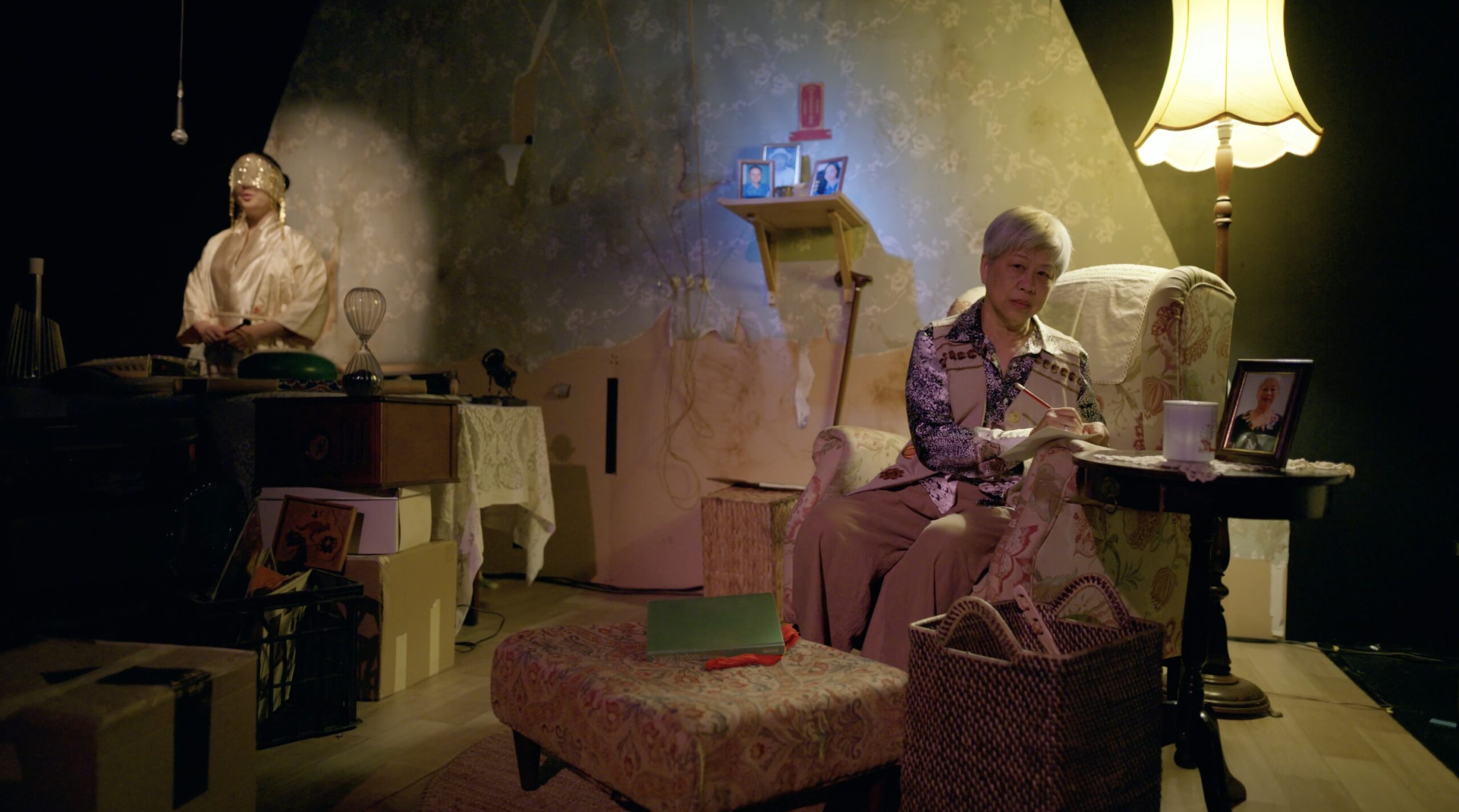
But the constant rearrangement of the boxes becomes fussily obsessional, just giving him something to do while he delivers what essentially is a monologue. It’s tricky, because the character of Heepa is hyperactive, and so a stillness to mirror Lady Dai’s would not work, yet the boxes become a distraction from the words. Perhaps there could have been more of the charming level of invention as when Heepa and Paw Paw are in a car consisting of two chairs, a round stool as the steering wheel and the bristles of a broom as the rearview mirror.
A proportion of the play is intended to be funny, but little of the humour strikes the mark. Infinitely more successful is the point it makes: that there are few more critical lessons in life than learning to tell someone you love them before they die; not living in a world of regrets, afterwards.